
DNBA: The most cost-effective way to remediate groundwater and enable land use
Rethinking brownfields
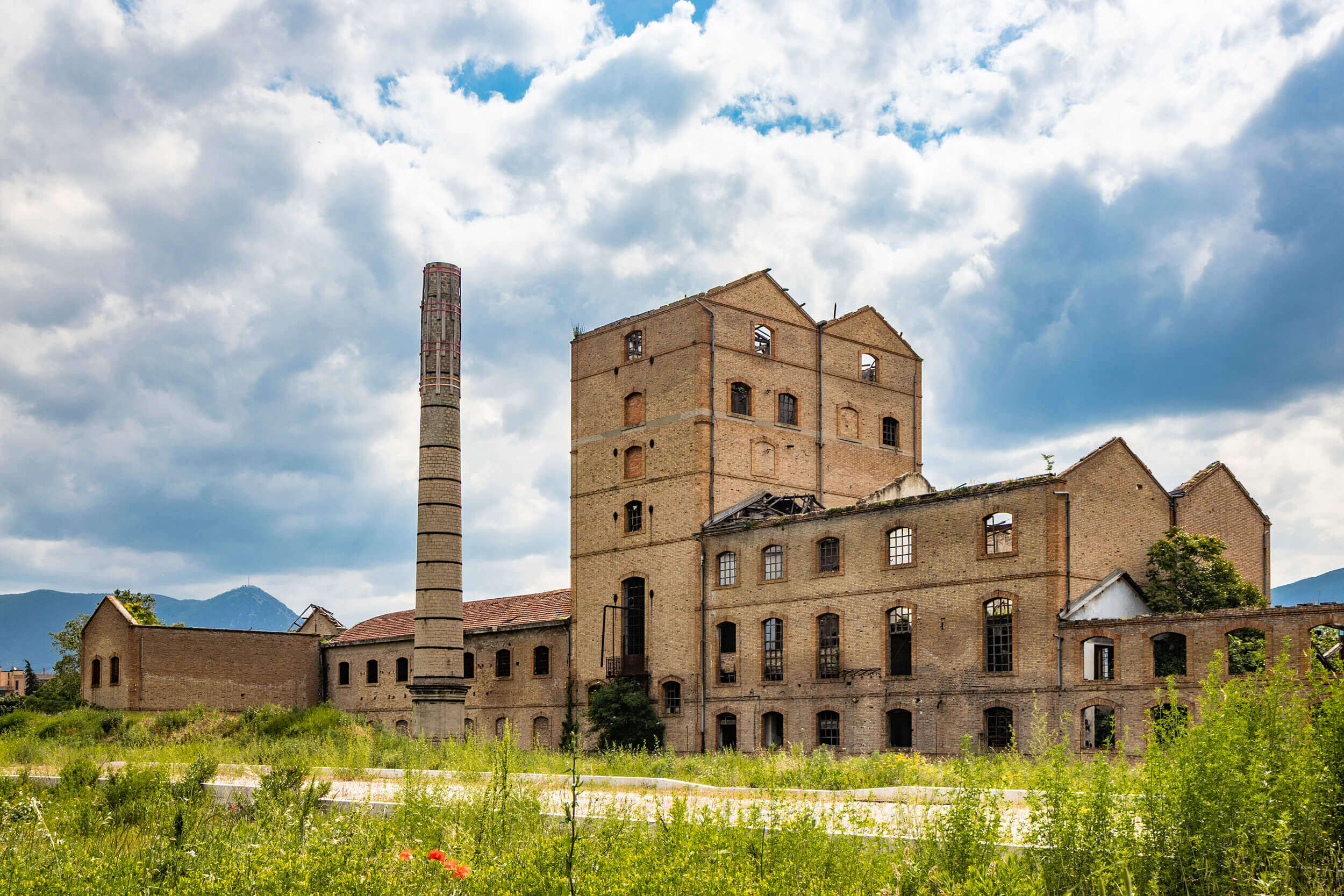
Increasing scarcity of available land makes the redevelopment of abandoned sites—so-called brownfields—more important than ever. Industry and the real estate sector often face legal and budget uncertainties: What is the condition of the site? What type of use is feasible? And at what cost? Ginger HPC INTERNATIONAL offers a cost-effective alternative to traditional pump-and-treat remediation, excavation with external disposal, or treatment through its microbiological DNBA in-situ remediation approach.
Sites previously used for industrial or military purposes often retain long-lasting traces of such use. At a site belonging to the military aviation industry of a well-known Franco-German corporation, Ginger HPC International identified groundwater contamination caused by LHKWs (volatile halogenated hydrocarbons) and Cr(VI) (carcinogenic chromium-6). These substances—including TCE, PCE, DCE, and vinyl chloride—were found in different parts of the groundwater: in two alluvial aquifers and one karst aquifer. Additionally, they impacted a residential area located downstream in the hydrogeological flow direction.
How did this contamination occur, and why was it dangerous?
The sources of contamination were often the infiltration of chlorinated solvents (a subgroup of LHKWs), which had been used for decades in surface cleaning of metals, glass, and plastics, as well as in electronics manufacturing, textile cleaning, extraction processes, as solvent components for organic compounds, and as degreasers, cold cleaners, and paint strippers. Until the 1990s, these substances were used and disposed of with little concern, as their hazardous potential was underestimated.
The result: widespread distribution in air and soil, along with infiltration into the ground, soil air, and groundwater. LHKWs are considered potentially hazardous to the environment and, in Germany, are classified in water hazard class 3—the highest hazard level. It is now proven that LHKWs and chromium VI can cause functional disorders of the liver, kidneys, and central nervous system, and are in some cases carcinogenic.
At a glance:
Efficient remediation of contaminated sites through DNBA
With traditional pump-and-treat remediation, predictability and cost efficiency often proved elusive. A study commissioned by the LUBW found that the projected remediation timeframes of this method are frequently exceeded because target values are not achieved. Continuing such remediation until the final target values are reached can pose a serious risk to budget certainty—and may even become a dealbreaker for well-planned land use projects. In some cases, the cost of recovering one kilogram of TCE (trichloroethene) can even exceed the maximum price of gold—unless the remediation approach is switched to a microbiological in-situ method such as DNBA.
This makes the success of Ginger HPC INTERNATIONAL all the more significant: in 47 completed remediation projects, microbiological in-situ groundwater remediation using DNBA (Dynamized Natural Bio-Attenuation) has been successfully applied as an alternative to pump-and-treat. Not only were the projected remediation timelines not exceeded—they were often shortened. Clients saved costs in the double-digit millions and reduced remediation durations by one to two decades compared to pump-and-treat methods. In addition, microbiological in-situ remediation is more environmentally friendly and sustainable, as it requires little to no electricity and produces no waste requiring disposal.
Why is DNBA more efficient, and how does it work?
Following a DNBA feasibility study, an initial injection was carried out using an adapted consortium of site-specific bacteria, along with specially developed substrates and nutrients, into existing groundwater monitoring wells.
This initiated a multi-stage process: within a few months, a reducing and anaerobic environment was established in the groundwater. This first reduced Cr(VI) to insoluble Cr(III), which then became irreversibly fixed within the mineral aquifer (the rock layer that conducts groundwater). Subsequently, within the same biochemical in-situ environment, chlorinated solvents were almost completely degraded—eliminating their risk to groundwater and human health.
Although a remediation period of more than seven years had originally been planned, the DNBA in-situ remediation was officially completed after just 4.5 years in coordination with the authorities. Water samples showed that contamination levels had been reduced, in some cases below detection limits. The remediation targets were therefore not only met but exceeded.
Compared to traditional pump-and-treat remediation, DNBA in-situ remediation in this case resulted in savings of approximately €12.7 million. According to Dr. Frank Karg, this level of cost-benefit efficiency—provided a DNBA feasibility study can be conducted—is guaranteed for all DNBA projects carried out by Ginger HPC INTERNATIONAL.
Further microbiological ecotoxicity tests, mineralization tests, and challenge tests were conducted to determine which substrates and nutrients are required for the applied microorganisms to also degrade toxic metabolites such as vinyl chloride and 1,2-dichloroethene, and to autonomously establish a pollutant-degrading bioreactor in the subsurface.
In this case, substrates were used to create reducing redox potentials (approximately -80 to -250 mV). In addition, naturally occurring pollutant degradation processes—already carried out by existing microorganisms—were enhanced and stimulated through microbiological laboratory analyses, for example by adding electron acceptors and nutrients.
Naturally occurring microbiological degradation processes (also known as Natural Bio-Attenuation) are quantified during the DNBA feasibility study using isotope fractionation and assessed for their applicability and potential for enhancement.
The result: the use of site-specific, pollutant-degrading bacterial consortia in combination with the appropriate substrates and nutrients leads to a self-sustaining microbiological dynamic of subsurface remediation—with maximum cost efficiency.
More success stories



Why work with us?
More than 75 years of experience
Since 1948, HPC has combined expertise and precision in environmental and engineering projects – ensuring reliable solutions that stand the test of time.
Strong international network
With offices across Europe and as a founding member of the INOGEN ALLIANCE, we bring global insights and local expertise to every project.
Award-winning sustainability
From international certifications to industry awards, our achievements reflect engineering precision, high standards, and a continuous drive for innovation.
Our Service Areas
Land Recycling
Experience. Responsibility. Worldwide.
Life is constantly evolving. New buildings and installations are emerging on freely available land. Elsewhere occupied land is being redeveloped and…

Environment and Safety
Experience. Responsibility. Worldwide.
The environment and our living conditions determine our quality of life. Development entails changes. Sustainable environmental development is the…
Infrastructure
Experience. Accountability. Valorisation.
Regional economic objectives of investment-related infrastructure policies can only be achieved by thorough infrastructure planning. Infrastructure…
Got a project in mind?
We have the solution.