
Tracing Elmshorn’s Past – Between Historical Contaminated Sites and Modern Urban Redevelopment
Elmshorn’s New City Centre
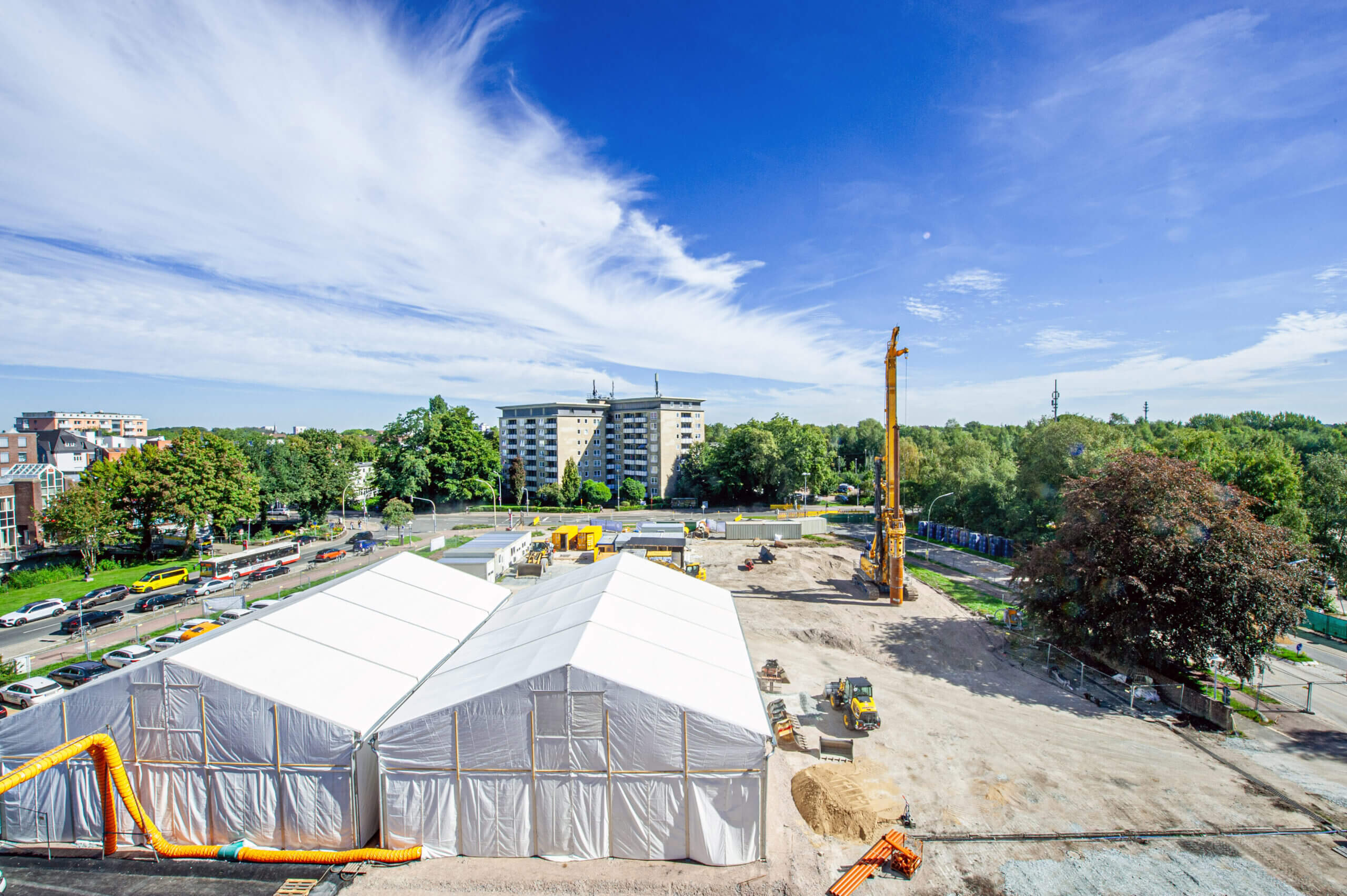
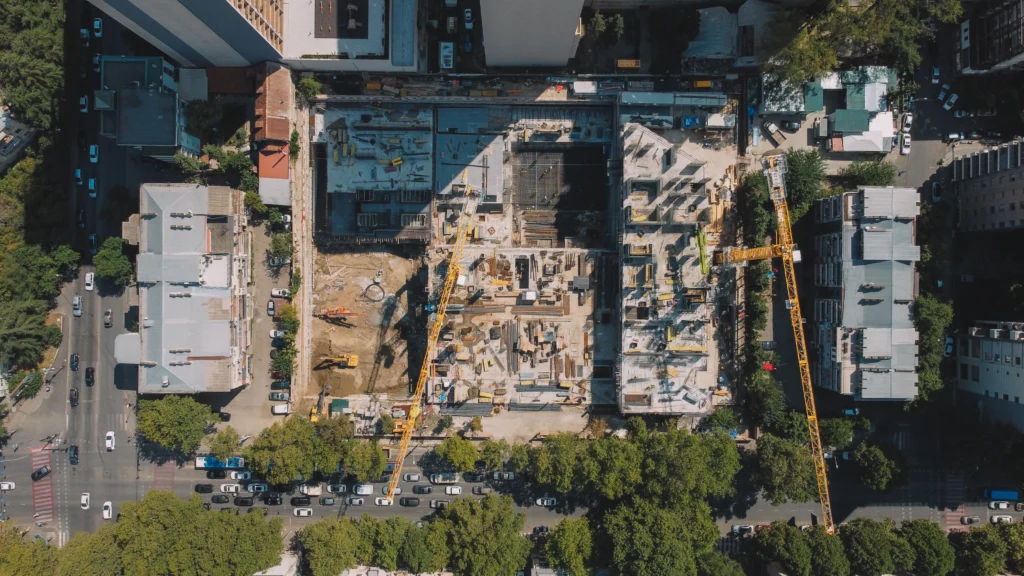
The northern German city of Elmshorn is reinventing its center: a new town hall, new residential and commercial buildings, and a picturesque, tree-lined promenade leading to the harbor are being created around the Buttermarkt with its historic market hall.
However, there is a catch: the area is a contaminated site. Remnants of an old leather factory, a post office, a gas station, and a gasworks lie hidden beneath the ground. The task is complex, and in the past only a few have dared to take it on. But we wouldn’t be Ginger HPC if we didn’t face this challenge. Preparing contaminated site assessments and developing safety concepts are, after all, our specialties.
Journey into the Past
Today’s challenges around the Buttermarkt are deeply rooted in the history of the site. In 1855, the first gasworks in the region was built here. Due to poor ground conditions, it was dismantled 40 years later. With the advancing industrialization, Elmshorn rapidly developed into an important center of the leather industry, and several large leather factories settled around the Buttermarkt. Tanning flourished.
However, success also had its darker side: the import of leather from the international raw hide market brought a risk to the leather centers of Elmshorn and Neumünster.
Anthrax pathogens were introduced along with the raw hides. This disease primarily affects cattle but can also infect humans and lead to severe or even fatal illness. To this day, contaminated residues from the tanneries in the soil cannot be ruled out—and they are not the only challenges. The operation of the gasometer and the gas station also contributed to soil contamination. In addition, a historical contamination with chlorinated hydrocarbons (LCHC) has been detected in one of the groundwater aquifers.
At a glance:
Life-Threatening Contaminated Sites Require Meticulous Procedures
In 2019, Ginger HPC was commissioned to prepare an environmental and geotechnical assessment for the replacement of wastewater sewers beneath the Buttermarkt as part of planned road reconstruction. Even the mere suspicion of anthrax pathogens makes opening the soil particularly dangerous—and for good reason: anthrax pathogens are classified as biological warfare agents. Protecting human life and health therefore has the highest priority.
Frederik Arnold, geologist and project manager, explains:
“Of course, we worked meticulously through the available data and, together with highly specialized equipment providers, were able to define protective clothing and measurement procedures. Despite all precautionary measures, trust within the team was essential, especially for the first test drillings.
I assembled the team from a few very experienced Ginger HPC employees and former fellow students working in the drilling crew—we have known each other for years and know we can rely on one another. The nights before the first drilling were still sleepless, and the relief after the first successful explorations and measurements was immense.”
Together with his colleague Hanna Kim, a water and environmental engineer and the second project manager for this project, Frederik Arnold has since established a routine for the measurements. The safety standards were extremely high, and the team members are recognized as experts in this field. While Frederik Arnold is responsible for planning field operations, selecting precisely fitted protective equipment, and preparing contaminated site assessments, Hanna Kim oversees geotechnical reports, groundwater calculations, coordination with authorities, and traffic safety measures.
From Theory to Practice: No Room for Grey Areas
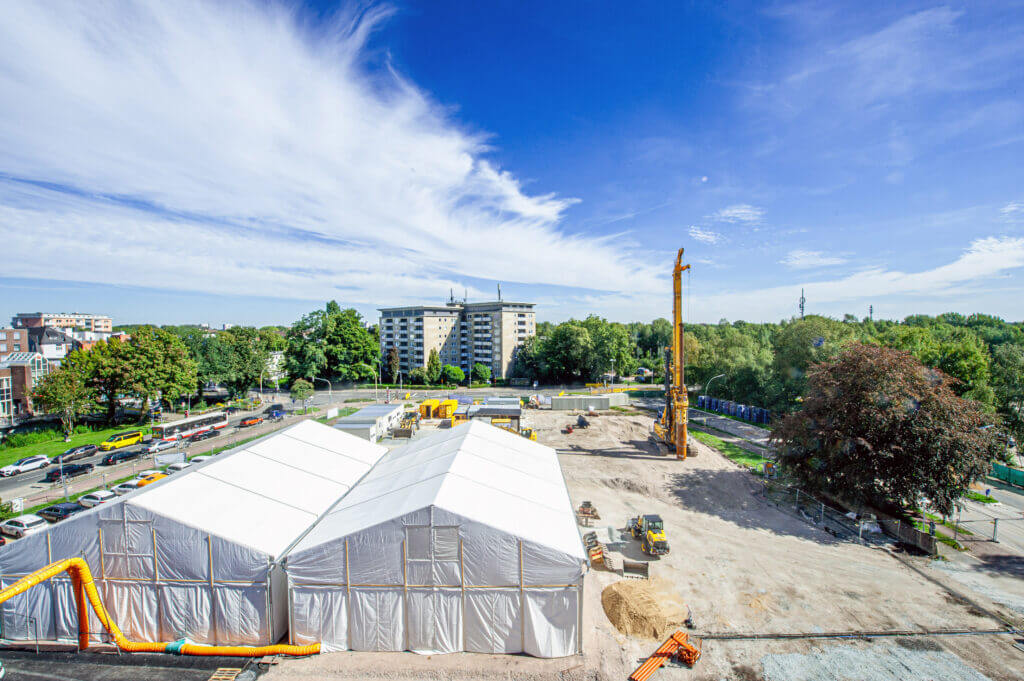
At the beginning of the project, construction personnel received detailed instructions on the protection concept developed by project manager Arnold. The extensive equipment can be intimidating, so part of his role was to reduce fears and build confidence in the safety concept. In addition, a so-called black-and-white zone was established to ensure the protection of both the environment and local residents. Soil extracted with specialized drilling equipment is dewatered in tents over several days, properly packaged, and then disposed of at a hazardous waste incineration facility.
Precision at Depth
During site investigations, the Ginger HPC team discovered—alongside contaminated materials—the lower section of a gasometer that had been installed three meters below the surface and was not visible. Through historical research combined with drilling and probing, the location, design, and filling material of the gasometer basin were precisely determined, allowing obstacle removal to be carried out according to the work and safety plans. The team can state with some pride that their calculated location of the gasometer basin deviated by only 0.5 meters. The construction and filling material corresponded exactly with the materials predicted during the historical investigation.
A Look at the Present
Obstacle removal has now been completed, and sewer construction is proceeding based on our geotechnical reports and our work and safety plan, carried out by highly specialized contractors. A joint venture between BAUER Resources GmbH (BAUER Umwelt division) and STRABAG AG (Transportation Infrastructure division) is performing the work on site. Once a week, staff from the Ginger HPC Bremen office travel to the site to conduct additional safety inspections. After all, monitoring is good—but when dealing with highly hazardous risks, double-checking is even better. When it comes to safety, we make no compromises.
We have since become a key contact point for hazardous contaminated site issues throughout the region and prepare expert reports on environmental remediation and land recycling. Our motivation is clear: we aim to protect the environment from pollution and the dangers of the past—and above all prevent new contamination. This principle guides every step we take.
Work in Progress: Continuous Innovation at the Site
Our work at the Buttermarkt is a balancing act. We are proud to enable safe construction and to remove contamination in an environmentally responsible way, yet the path is filled with challenges—such as the enormous time and cost required for soil treatment and the frequently overburdened infrastructure of waste incineration facilities. Therefore, we continue to think ahead: how can the process be optimized, made even safer for people and the environment, and designed so that it can be transferred to other sites facing similar contamination challenges?
During brainstorming sessions, many approaches are explored. One idea is to cast the contaminated soil into epoxy resin blocks. Anthrax spores cannot escape from these blocks, allowing safe storage in landfills without the need for incineration.
A similar method is already used for asbestos. However, we encounter obstacles here as well, such as the lack of space in landfills and the need for regulatory approvals. One thing is clear: our work is not finished yet. We remain committed to continuing the search for solutions that are both safe and efficient. Our goal is to make a long-term and sustainably positive impact—not only at the Buttermarkt, but everywhere we work. Further information about this project can be found under Urban Redevelopment Elmshorn.
More success stories

Why work with us?
More than 75 years of experience
Since 1948, Ginger HPC has combined expertise and precision in environmental and engineering projects – ensuring reliable solutions that stand the test of time.
Strong international network
With offices across Europe, as part of the Ginger Group and as a founding member of the Inogen Alliance, we bring global insights and local expertise to every project.
Award-winning sustainability
From international certifications to industry awards, our achievements reflect engineering precision, high standards, and a continuous drive for innovation.
Our Service Areas
Land Recycling
Experience. Responsibility. Worldwide.
Life is constantly evolving. New buildings and installations are emerging on freely available land. Elsewhere occupied land is being redeveloped and…

Environment and Safety
Experience. Responsibility. Worldwide.
The environment and our living conditions determine our quality of life. Development entails changes. Sustainable environmental development is the…
Infrastructure
Experience. Accountability. Valorisation.
Regional economic objectives of investment-related infrastructure policies can only be achieved by thorough infrastructure planning. Infrastructure…
Got a project in mind?
We have the solution.