
Ginger HPC and the IQ Towers of Hamburg’s HafenCity
Building in the Heart of Hamburg
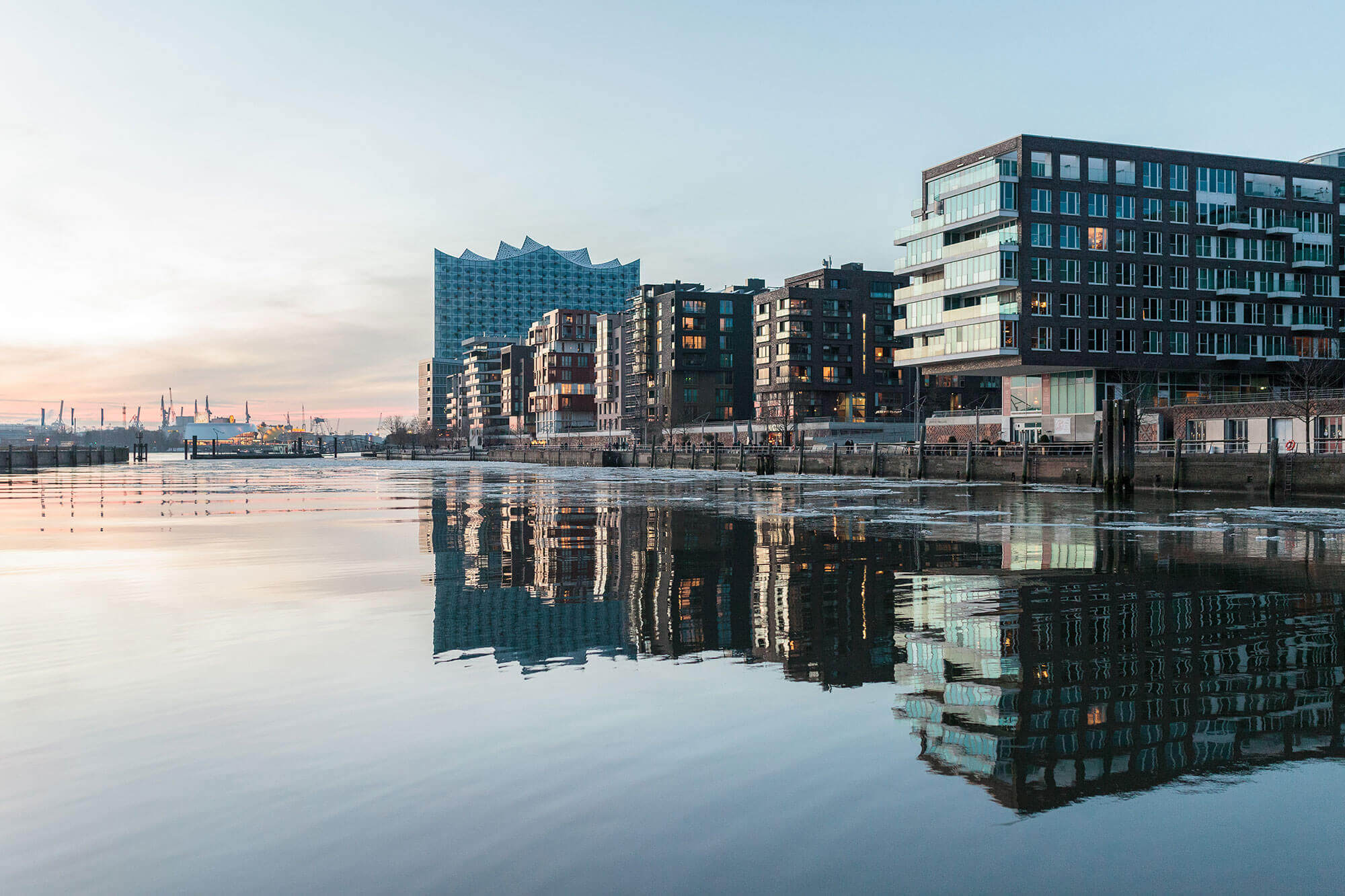
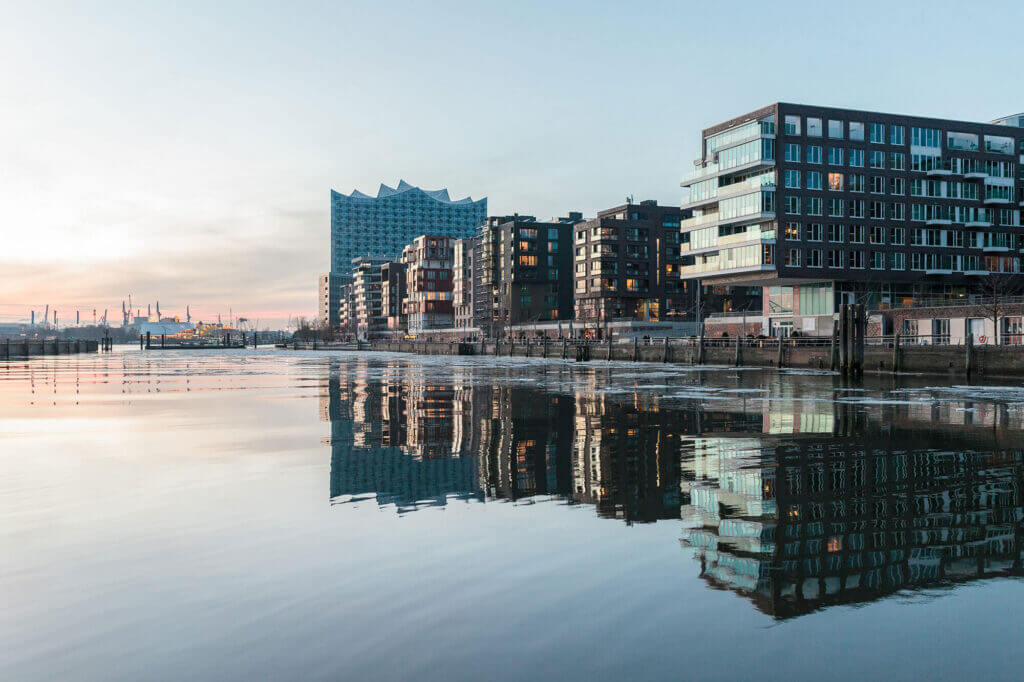
Anyone visiting the heart of Hamburg – HafenCity – usually looks at the impressive new and historic buildings or out across the wide water. Yet it is also worth taking a look at the ground beneath. Only those who understand the subsoil can successfully build in a harbour environment shaped by sand, storm surges and occasional water ingress.
Hamburg’s HafenCity is a place of superlatives. It is the largest urban development project in a European city centre, and only a few comparable projects exist worldwide. By 2025, residential and office space will be created here on an area of around 157 hectares. The district will also provide space for shops, schools and even a university.
In the heart of this new quarter, directly next to HafenCity University, three striking buildings were completed in 2017: the IQ Towers. The most prominent of them is the 70-metre-high office tower, which features not only 18 upper floors but also two basement levels. All three buildings are connected by a two-storey underground car park – a particular challenge on a harbour site. In addition, the U4 underground line runs directly beneath the underground parking structure. Located close to the mouth of the Elbe River, the construction works were also exposed to tidal influences and potential storm surges.
As a result, major challenges had to be addressed even before construction began: how could the excavation pit be secured and kept dry?
Stefan Reich, head of the Hamburg branch of HPC, took on this task together with his team. The civil engineer has more than 30 years of experience in building critical infrastructure next to – and sometimes even within – water. Together with his team, he develops concepts for island sewage treatment plants, flood protection systems, bridges and naval facilities.
A Trained Eye Meets the Riverbed
On behalf of the client, ECE Projektmanagement GmbH & Co. KG, HPC AG carried out geotechnical, hydrogeological and waste-management investigations and planning. The HPC specialists found hardly any contaminants. This is mainly due to the site’s particular history. Until the end of the 19th century, the area was part of the harbour basin of the former timber port. When the basin was no longer required and additional storage space was needed, it was simply filled with clean sand and enclosed by quay walls. The reclaimed harbour land was subsequently developed with sheds and warehouses and used for cargo handling and storage until the 1990s. As a result, any contamination remained largely limited to near-surface layers.
The results of the soil and groundwater investigations reflected this history. By analysing historical boreholes and cone penetration tests, the investigation team determined that the subsoil consists of loose sand down to a depth of around ten metres, underlain by organic material and silt layers from the former harbour floor.
The IQ Towers: Built on Sand – Yet Secure
At this location, the difference between high and low tide normally exceeds 3.6 metres. Several times a year, storm surges can further raise these tidal high-water levels.
This meant that within a confined construction site, and under the influence of ebb, flood and potential storm surges, the excavation pit had to be secured and kept dry in order to construct the foundations of the buildings. To prevent groundwater from breaking through the base of the excavation pit, automatically controlled wells were installed. At the same time, neither too much nor too little water could be pumped out. The required pumping volume had been calculated in advance by HPC.
At a glance:
November Storm Surge 2015: Water Ingress and Rapid Response
Tourists often see only the beauty of the harbour. Residents of Hamburg also know the challenges posed by the river, which is regularly affected by storm surges. The storm surge season lasts from 15 September to 31 March of the following year. The Port of Hamburg is explicitly classified as a vulnerable area. Consequently, storm surge protection is mandatory – and such protection was also designed and implemented for the IQ Towers. HPC advised the contractor BAM on the development of an effective protection system consisting of waterproof-wrapped sand-filled big bags, filter mats, toe filters, surcharge bodies and slope stabilization measures.
However, reliable storm surge protection cannot simply be planned and installed once and then left unattended. On the morning of 30 November, during a storm surge event, the construction company discovered a small leak behind a quay wall within the excavation pit. Initially, it was considered relatively harmless and temporarily sealed with a plug. Stefan Reich visited the site the same day and quickly realised that the weak point was highly dangerous – especially during storm surge season. During the second storm surge, which coincided with the evening high tide, significantly more water began to escape. The Elbe’s water threatened to erode the surrounding soil and potentially breach the quay wall.
Designed Long-Term Protection
The HPC team responded that very night. The leaking area was secured against erosion using a large surcharge filter made of gravel placed on a geotextile base. Its weight also helped stabilize the point of water ingress. Construction work only had to be briefly interrupted over the following days in order to pump out the water that had already entered the excavation pit. Afterwards, HPC developed a long-term stabilization concept for the weak point to ensure its safety after the buildings were completed.
Subsequent investigations showed that the excavation pit protection system had been fully intact prior to the incident. However, it turned out that the sheet-pile wall along the riverbank itself contained a previously unknown leak through which the rising Elbe water could enter unhindered. Once again, the incident demonstrated how crucial monitoring and practical experience are in dealing with the storm surges of northern Germany.
Today, the buildings have long been completed, and the underground railway continues its regular service beneath them without interruption. From the upper floors of the IQ Towers, visitors enjoy an impressive view over Hamburg’s harbour and the Elbphilharmonie. Only a few subway passengers, residents or visitors realise how much expertise and experience were required to develop this site. Anyone familiar with the work carried out by the Hamburg-based HPC team will view this remarkable corner of HafenCity from a very different perspective.
The buildings have long since been completed, and the subway continues its regular service beneath them without interruption. From the upper floors of the IQ Towers, there is a magnificent view over Hamburg’s harbour and the Elbphilharmonie. Only a few subway passengers, residents, or visitors realize how much expertise and experience were required to develop this site. Anyone familiar with the work of the Hamburg-based HPC team will certainly look at this impressive corner of HafenCity with a different perspective.
More success stories


Why work with us?
More than 75 years of experience
Since 1948, Ginger HPC has combined expertise and precision in environmental and engineering projects – ensuring reliable solutions that stand the test of time.
Strong international network
With offices across Europe, as part of the Ginger Group and as a founding member of the Inogen Alliance, we bring global insights and local expertise to every project.
Award-winning sustainability
From international certifications to industry awards, our achievements reflect engineering precision, high standards, and a continuous drive for innovation.
Our Service Areas
Land Recycling
Experience. Responsibility. Worldwide.
Life is constantly evolving. New buildings and installations are emerging on freely available land. Elsewhere occupied land is being redeveloped and…

Environment and Safety
Experience. Responsibility. Worldwide.
The environment and our living conditions determine our quality of life. Development entails changes. Sustainable environmental development is the…
Infrastructure
Experience. Accountability. Valorisation.
Regional economic objectives of investment-related infrastructure policies can only be achieved by thorough infrastructure planning. Infrastructure…
Got a project in mind?
We have the solution.